India's Zombie Banks: The $50 Billion Reform Bet

The 26% voting rights cap keeps India's state banks cheap. Parliament could change that.
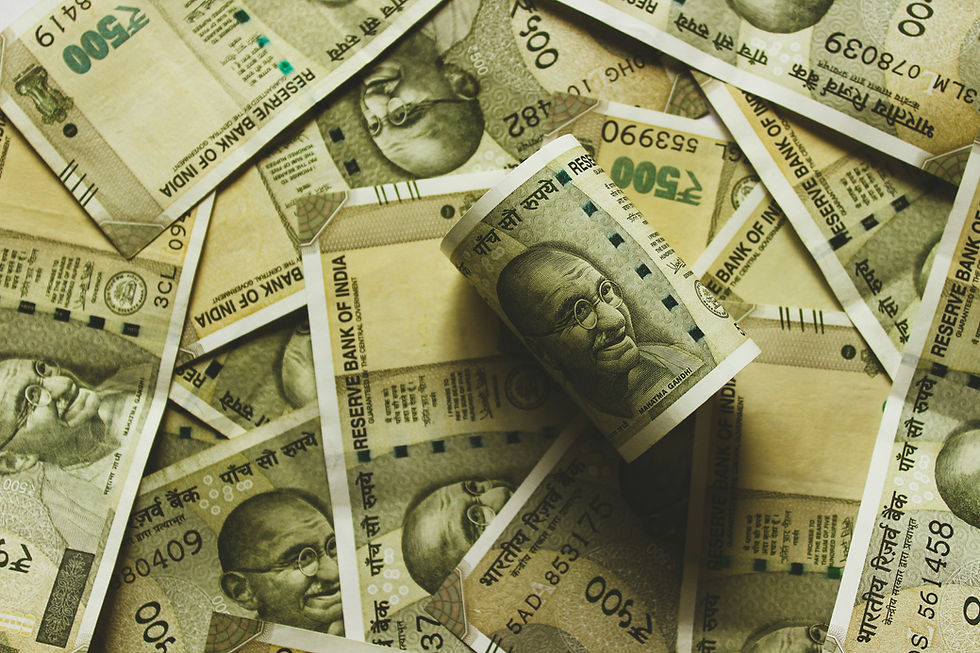
While global headlines focus on the volatility of European recovery, a more significant structural shift is quietly unfolding in the East. India is currently firing on all cylinders, with Goldman Sachs Research projecting a robust 6.9% real GDP growth for calendar year 2026. However, there is a massive ghost in the machine: a cluster of state-run Public Sector Undertaking (PSU) banks that sit on the world’s most sophisticated digital payment stack—the Unified Payments Interface (UPI)—and a massive rural footprint, yet trade at depressed valuations that often defy financial logic.
Why are these giants trading at a fraction of their private-sector peers like HDFC or ICICI? The answer isn't just on the balance sheet; it is rooted in the structural limitations of government control.
The 26% Voting Rights Cap and Management Inertia
The primary anchor on these institutions is a specific regulatory ceiling: the bank voting rights cap. Under the Banking Regulation Act, 1949, voting rights for any single investor in an Indian banking entity are strictly capped at 26%, regardless of how much equity that private investor actually holds.
This legal boundary has historically kept activists and strategic institutional investors out of the boardroom, preventing the kind of governance shock needed to modernize legacy institutions. Consequently, management has often faced little external pressure to innovate, allowing public capital to fund inefficient legacy systems while private competitors rapidly capture high-growth urban markets.
Data highlights the cost of this inertia: despite a massive national footprint, major PSU banks have historically traded at a significant price-to-book (P/B) discount compared to private lenders, which frequently command multiples above 2.0x to 3.0x. However, the end of this stagnant world of state-dominated banking appears closer than ever.
The Catalyst: The Viksit Bharat Legislative Breakthrough
In the Union Budget, the Indian government proposed the constitution of a high-level committee on Banking for Viksit Bharat (Developed India). A primary mandate of this panel is to review the restrictive 26% voting rights cap to better align investor ownership with corporate control.
If Parliament passes a legislative amendment to lift this cap, the long-delayed IDBI Bank privatization will serve as the starting gun for a massive structural re-rating of the entire banking sector. This reform is tied directly to the government’s broader fiscal strategy; for the current fiscal year, the center has set a conservative disinvestment target of ₹47,000 Crore (approximately $5.6 billion) under miscellaneous receipts, putting immense pressure on state assets to perform.
Concurrently, PSU bank health has turned a corner. According to the Ministry of Finance, state-run banks achieved an all-time high net profit of ₹1.98 Lakh Crore ($23.7 billion) in FY26, driven by record-low Non-Performing Assets (NPAs) and cleaner post-pandemic balance sheets. Despite these institutional improvements, the public markets still frequently price them like stagnant government departments.
Three Economic Scenarios for the Indian Banking Sector
This policy shift represents a profound structural transition for the region. The ultimate macroeconomic outcome will likely unfold across three distinct paths:
Scenario 1: The Big Bang Privatization
The government successfully moves its equity stake below 51%, allowing a state-run bank to appoint a private-sector CEO with a mandate for profitability over political mandates. If a trial entity like IDBI gains clean-slate management and proportionate board control, historical data from previous public-to-private transitions suggests market valuations could quickly re-align with private peers toward a 2.5x Book Value multi-tier rating.
Scenario 2: The UPI Spin-off (The Wildcard)
State banks possess a powerful, unmonetized asset: massive transactional data on rural consumption habits via UPI infrastructure. An activist-led board could force a strategic spin-off of the digital and fintech arm of a major PSU bank. Given that Indian fintech firms command premium enterprise value-to-revenue multiples relative to traditional commercial lenders, a sum-of-the-parts analysis indicates this unlocked digital equity could value the enterprise 60% to 70% higher than the current consolidated market cap.
Scenario 3: The Dividend Goldmine
If full privatization stalls due to legislative delays, the government will likely leverage these banks for massive special dividends to fund national infrastructure spending. Shareholders will not just be waiting for growth; they will be highly compensated for their patience. This trend is already active; total dividend payouts from state-run enterprises reached ₹74,100 Crore in FY25, establishing a high-yield floor for public equities even during periods of broader market consolidation.
The Final Question
The government’s 2047 Viksit Bharat timeline is an ambitious roadmap for a developed India. Yet, whether that long-term vision is strong enough to keep capital markets buoyant through minor economic friction—such as localized urban unemployment spikes—remains an open debate. The speed at which Parliament moves to drop the 26% voting rights cap will determine whether the public sector banking discount finally evaporates or the ghost in the machine is here to stay.


Comments