Why Consumer Protection Law Fails the Behavioural Test

Retailers often utilise the consumer’s margin of irrationality to maximise profits, but current consumer protection laws—built on the myth of the rational actor—are failing to stop this systemic manipulation.

Photo by Hugo Clément on Unsplash
In classic economic theory, the marketplace is populated by Homo economicus - rational consumers who diligently calculate utility, process all available price data, and make decisions that maximise their personal welfare. However, the reality of modern commerce tells a different story. As pioneering psychologists demonstrated, humans rely on a web of cognitive shortcuts that are systematically prone to error. Modern retail environments are rarely neutral platforms for exchange; instead, they are highly engineered decision environments designed to exploit these predictable behavioural biases, turning the consumer's margin of irrationality into corporate profit. This systematic exploitation raises a profound question: is this simply efficient market design, or does it demand robust regulatory intervention?
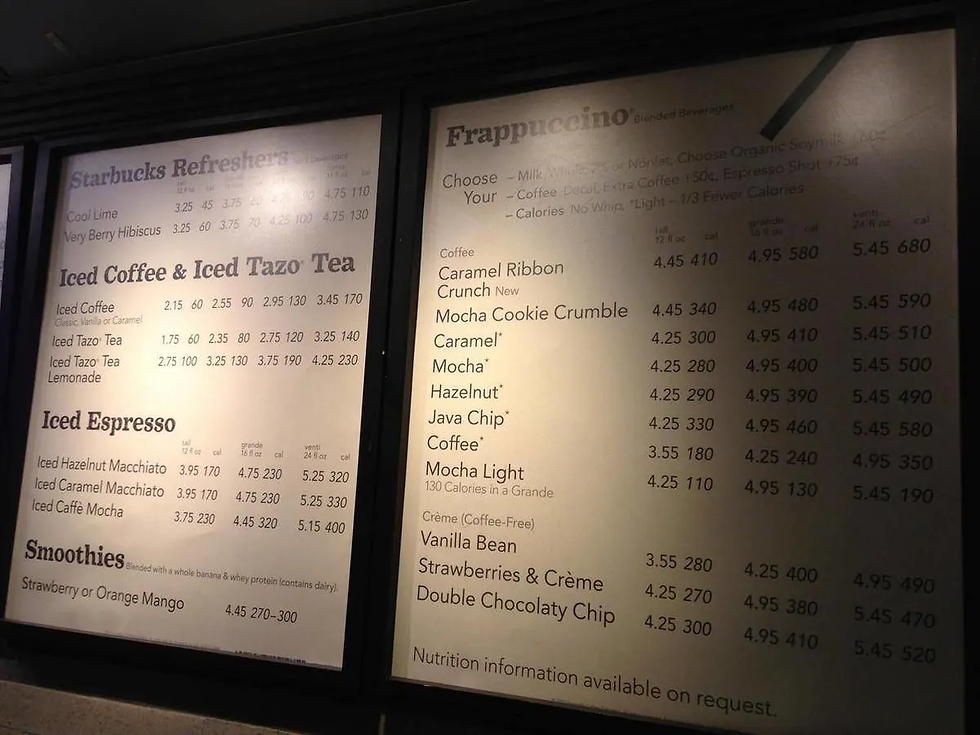
The manipulation begins long before a consumer realises they are comparing prices, often driven by a phenomenon known as the ‘Decoy Effect’. As behavioural economist Dan Ariely extensively documented, retailers frequently introduce a third, strategically flawed choice to distort a consumer’s perception of value. Consider buying popcorn at a movie theatre: a small popcorn costs £3 and a large costs £7. Many would choose the small because £7 feels too expensive. If a medium is added for £6.50 (the decoy), it is clearly a worse deal than the large. Consequently, many customers will switch to purchasing the £7 large because it seems like a great bargain by comparison. By exploiting our reliance on relative rather than absolute valuation, retailers successfully nudge consumers toward higher expenditures. This proves that transparency alone does not guarantee fair competition. Even when prices are fully disclosed, the presence of a decoy manipulates choice, exposing the failure of current consumer laws that focus strictly on price disclosure rather than price framing.
Source: Pinterest
Buy Now, Regret Later
Once a consumer is engaged, retailers target their inability to accurately predict their own future emotional states, exploiting what economists call 'Projection Bias’. When making choices that involve a trade-off across time, consumers frequently fall victim to ‘egocentric empathy gaps’, mistakenly projecting their current, immediate preferences onto their future selves. E-commerce platforms like Amazon weaponize this bias by utilising high-pressure tactics like live countdown timers or low-stock alerts. These triggers intentionally shift the consumer from a rational, deliberate "cold" state into a panicked, high-adrenaline "hot" state. In this heightened emotional condition, the immediate psychological premium of securing the item overpowers long-term financial discipline. This allows retailers to capture revenue from impulse buys that a calm consumer would have rejected.
Regulation Catches Up - Sort Of
This is where online stores cross the line from smart design into outright manipulation. Under the European Union’s Digital Services Act (DSA), legal frameworks have finally begun to acknowledge human irrationality by explicitly banning "deceptive design interfaces" - manipulative user interfaces designed to trick users into making decisions against their best interests, backing the rules with fines of up to 6% of a platform’s global turnover. The real-world consequences of this behavioral engineering were starkly exposed by the Federal Trade Commission’s (FTC) landmark legal action against Amazon, which charged the tech giant by a huge $2.5 billion for using predatory "dark patterns" to deceptively trap millions of consumers into recurring Prime subscriptions. Similarly, the UK has aggressively strengthened its rules by passing the groundbreaking Digital Markets, Competition and Consumers Act. This new law gives the Competition and Markets Authority (CMA) sweeping new powers to issue multi-billion-pound fines against platforms utilising deceptive urgency claims and countdown tickers. Supporters argue that by passing these rules against fake online shortages, modern consumer law is finally moving away from the outdated rule that places all the responsibility on the shopper. Instead of leaving shoppers to fend for themselves, the law is stepping in to protect people exactly when online stores try to panic them into buying.

Bryce Durbin / TechCrunch
However, despite these landmark regulatory strides, current frameworks remain fundamentally inadequate. While the DSA can ban clear design tricks like countdown timers, it is virtually powerless against more sophisticated, algorithmic choice framing. Modern e-commerce platforms do not rely on static traps; instead, they utilise big data to dynamically adjust interfaces based on a consumer’s real-time psychological vulnerabilities. As long as regulations target isolated design patterns rather than the underlying business model of exploiting cognitive vulnerabilities, consumer law will continue to fail to stop this systemic manipulation.
Virtue for Sale
Even when consumers consciously try to make virtuous, rational choices, retailers have found a way to use that virtue against them through the behavioural economic concept of ‘Moral Licensing’. This psychological phenomenon dictates that when individuals do something they perceive as good or disciplined, it subconsciously grants them a "license" to act indulgently or selfishly immediately afterward. Supermarkets exploit this loophole through deliberate store layouts, almost universally placing the fresh, organic produce section right at the entrance. This technique was made famous by retail strategist Paco Underhill in the mid-20th century. As shoppers fill their baskets with vegetables, fruits, and healthy options alike, they accumulate ‘psychological capital’. Having established their identity as a "virtuous shopper," their cognitive defences drop. As they navigate into the middle and rear aisles, they become statistically far more susceptible to purchasing high-margin luxury goods, processed snacks, desserts, or alcohol. The retailer has successfully converted the consumer’s initial burst of discipline into a justification for subsequent irrational overspending.

Photo by Zoshua Colah on Unsplash
While some argue that physical store layouts are simply traditional marketing, the transition of these tactics into hyper-personalised digital spaces changes the ethical landscape entirely. Physical consumers can walk away; digital consumers are tracked by algorithms that know exactly when their cognitive defenses are at their lowest.
Ultimately, these behavioural mechanisms reveal that consumer irrationality is neither random nor rare; it is structured and predictable. By masterfully manipulating choice architecture through the Decoy Effect, Projection Bias, and Moral Licensing, modern retailers can systematically bypass logical decision-making. If consumer protection frameworks continue to assume that buyers are rational actors who just need "clear pricing" to make good choices, they will continue to fail. To preserve true consumer autonomy in an era of hyper-personalised retail, regulatory policy must evolve. We must stop treating behavioural exploitation as standard market efficiency and start recognizing it as systemic economic harm.


Comments